Call Us:
(800) 362-3097
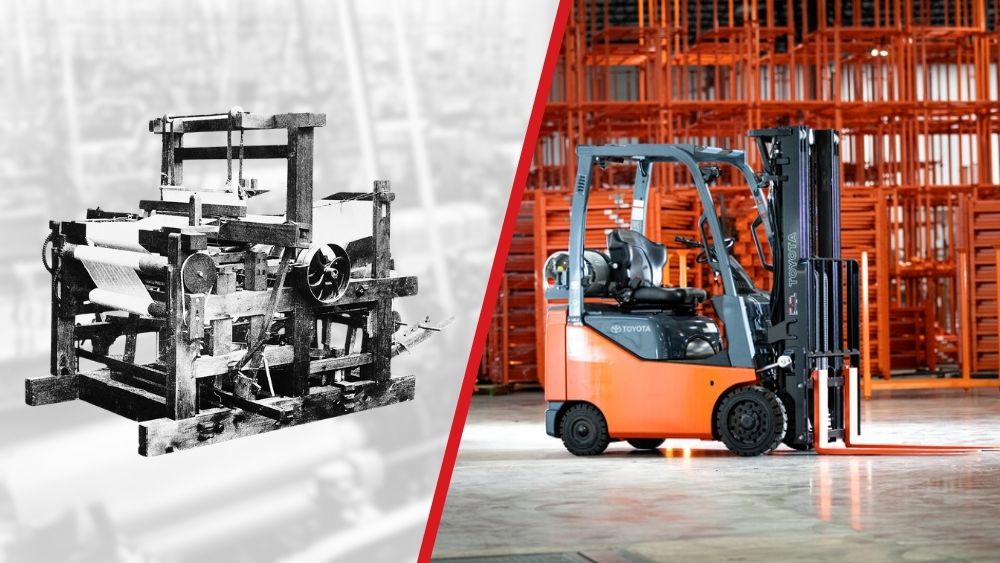
The Two Pillars of Toyota: How a 1920s Loom Revolutionized Modern Material Handling
August 24, 2026
When most people think about Toyota, they think about cars – or in our world, forklifts and material handling equipment. But the principles that make Toyota a global leader didn’t start on an assembly line. They started with a loom.
Understanding Toyota’s foundation isn’t just about corporate history. It’s about understanding why Toyota lift trucks are built the way they are, and why the Toyota Production System continues to set the standard for efficiency and quality in material handling operations worldwide.
The Two Pillars: JIT and Jidoka
Toyota’s legendary Toyota Production System rests on two fundamental pillars:
Just-In-Time (JIT) – producing only what is needed, when it’s needed, in the amount needed. This minimizes waste, reduces inventory costs, and improves flow.
Jidoka (自働化) – often translated as “automation with a human touch.” This is where the story gets interesting.
The Loom That Changed Everything
In 1896, Sakichi Toyoda (note the “d” in the family name) invented Japan’s first power loom. But it was his 1924 invention that would transform manufacturing forever: the Type-G Toyoda Automatic Loom.
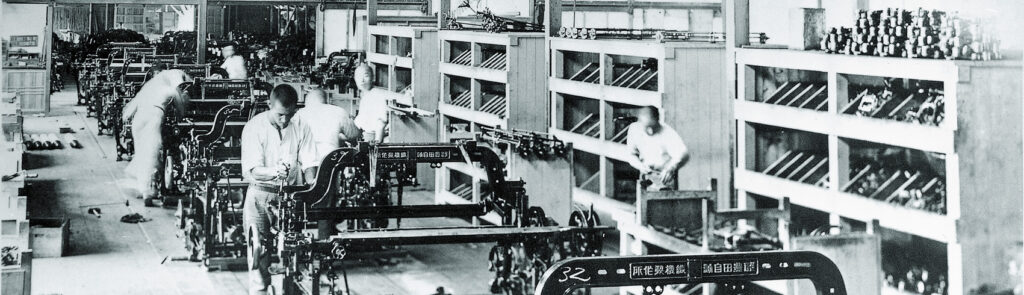
The revolutionary feature? The loom could detect problems and stop itself.
When a thread broke or ran out, the machine didn’t keep running and producing defective fabric. Instead, it stopped immediately and signaled for help. This was radical. Before this, looms would continue running regardless of defects, requiring constant human monitoring and producing rolls of flawed material that had to be scrapped or reworked.
Sakichi Toyoda built a machine that could detect abnormalities and stop production before bad parts piled up. He gave machines the ability to exercise judgment, something previously reserved for human workers.
This is Jidoka: automation with intelligence. Automation with a human touch.
From Looms to Lift Trucks: Why Jidoka Matters Today
When Sakichi’s son, Kiichiro Toyoda, founded Toyota Motor Corporation in 1937 (using proceeds from selling the loom patent rights), he brought this principle with him. And it’s been embedded in every Toyota product since – including the lift trucks serving your operation.
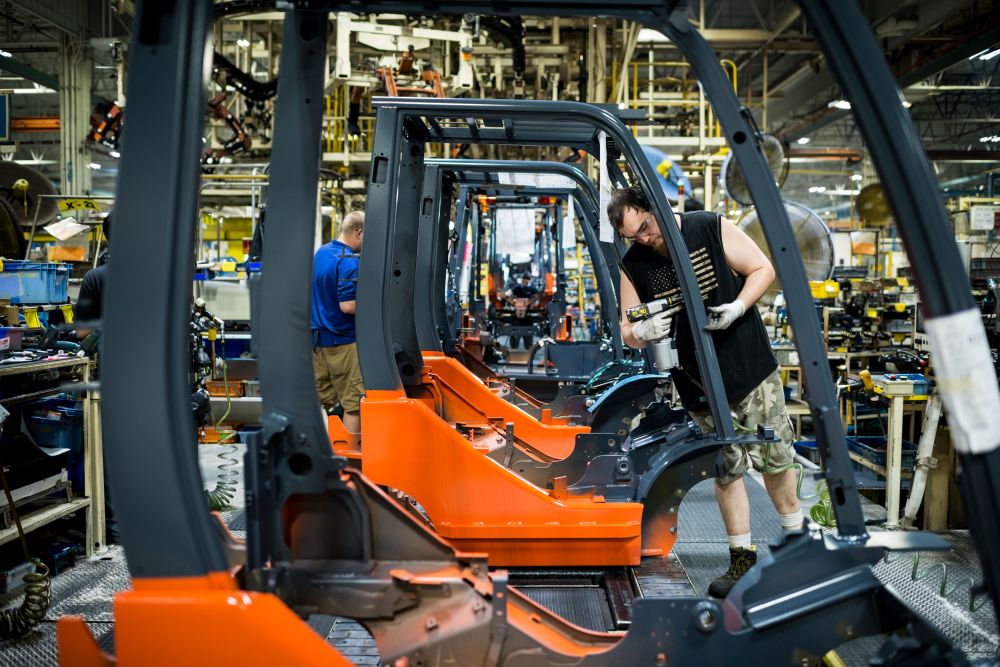
What Jidoka Means in Modern Material Handling
In today’s warehouses and manufacturing facilities, Jidoka takes many forms:
Built-In Quality Systems – Toyota lift trucks don’t just move product; they’re designed to detect problems before they become costly failures. From the System of Active Stability (SAS) that aids in the prevention of tip-overs to operator presence systems that stop operation when unsafe conditions are detected, these machines embody the same principle as that 1924 loom.
Intelligent Automation – Modern Toyota equipment doesn’t replace human judgment, it enhances it. When a forklift detects an unsafe load or operating condition, it alerts the operator and may limit functionality. This isn’t about removing humans from the equation; it’s about giving them better tools to make better decisions.
Stop and Fix – The Jidoka principle empowers anyone to stop production when they spot a problem. In material handling, this means operators who are trained and trusted to halt operations when something isn’t right – rather than pushing through and compounding problems.
JIT and Jidoka: Better Together
While Jidoka gets less attention than Just-In-Time, you can’t have sustainable JIT without it. Here’s why:
JIT creates lean, efficient flow with minimal inventory buffers. But without quality built in at each step (Jidoka), one defect or breakdown can shut down your entire operation. There’s no safety stock to fall back on.
Jidoka ensures that quality is maintained at each step, so the smooth flow of JIT doesn’t come at the expense of reliability. When a Toyota forklift detects a potential issue and alerts the operator, it’s preventing that one problem from cascading through your entire material flow.
Think of it this way:
- JIT ensures the right material is in the right place at the right time
- Jidoka ensures that material is handled correctly every single time
The Human Touch in an Automated World
As warehouses and distribution centers rush toward automation – AGVs, AS/RS systems, robotics – the Jidoka principle is more relevant than ever.
True automation isn’t about removing people. It’s about:
- Building intelligence into systems that can detect and respond to problems
- Empowering workers with tools that enhance their judgment, not replace it
- Creating operations that stop when something’s wrong, rather than compounding errors at high speed
This is why Toyota doesn’t just build automated guided vehicles. They build intelligent material handling systems that know when to stop, when to alert, and when to ask for human intervention.
Learn more about how Toyota Lean Management principles can transform your entire operation.

What This Means for Your Operation
When you’re evaluating material handling equipment or redesigning your workflow, ask yourself:
- Does your equipment help operators prevent problems, or just react to them? Jidoka-inspired systems catch issues before they cascade.
- Can your team stop production when they spot a problem? Or is there pressure to “keep moving” even when something’s not right?
- Are you pursuing automation for its own sake, or automation with intelligence? Technology should enhance human judgment, not bypass it.
- When something goes wrong, how quickly can you detect it? In a JIT environment, early detection is everything.
The Toyota Production System wasn’t built in a boardroom. It was built by people who understood that the best machines are the ones that know their limitations, that can detect when something’s wrong and ask for help.
From a loom in 1924 to the most advanced material handling systems in 2026, that principle hasn’t changed.
The Lift Truck Center Difference
At Lift Truck Center, we don’t just sell Toyota equipment because of the nameplate. We partner with Toyota because their engineering philosophy aligns with how we believe material handling operations should run: efficiently, safely, and with quality built into every movement.
Whether you’re running a fleet of Toyota forklifts or considering your first one, understanding these foundational principles helps explain why Toyota equipment performs differently. It’s not just built to move materials, it’s built to move them right.
Because sometimes the most advanced technology is the technology that knows when to stop.
Want to dive deeper into these principles? Check out Toyota’s guide on getting started with your lean journey or learn more about the complete Toyota Production System.
Want to learn more about how Toyota’s principles can improve your material handling operation? Contact Lift Truck Center to speak with one of our specialists about equipment solutions designed with both efficiency and intelligence in mind.
Categories