Call Us:
(800) 362-3097
What Is Automation in Material Handling?
March 11, 2026
If you’ve been hearing more about automation lately – in trade publications, at industry events, or maybe from your sales rep – you’re not alone. Automation is one of the most talked-about topics in warehousing and logistics right now. But for a lot of operations, it still feels like something that belongs in a massive Amazon fulfillment center, not a mid-sized distribution center or manufacturing facility.
That’s a common misconception, and it’s one worth clearing up – because automation has become far more accessible, scalable, and practical than most people realize.
So let’s start at the beginning: what does automation in material handling actually mean?
The Simple Version
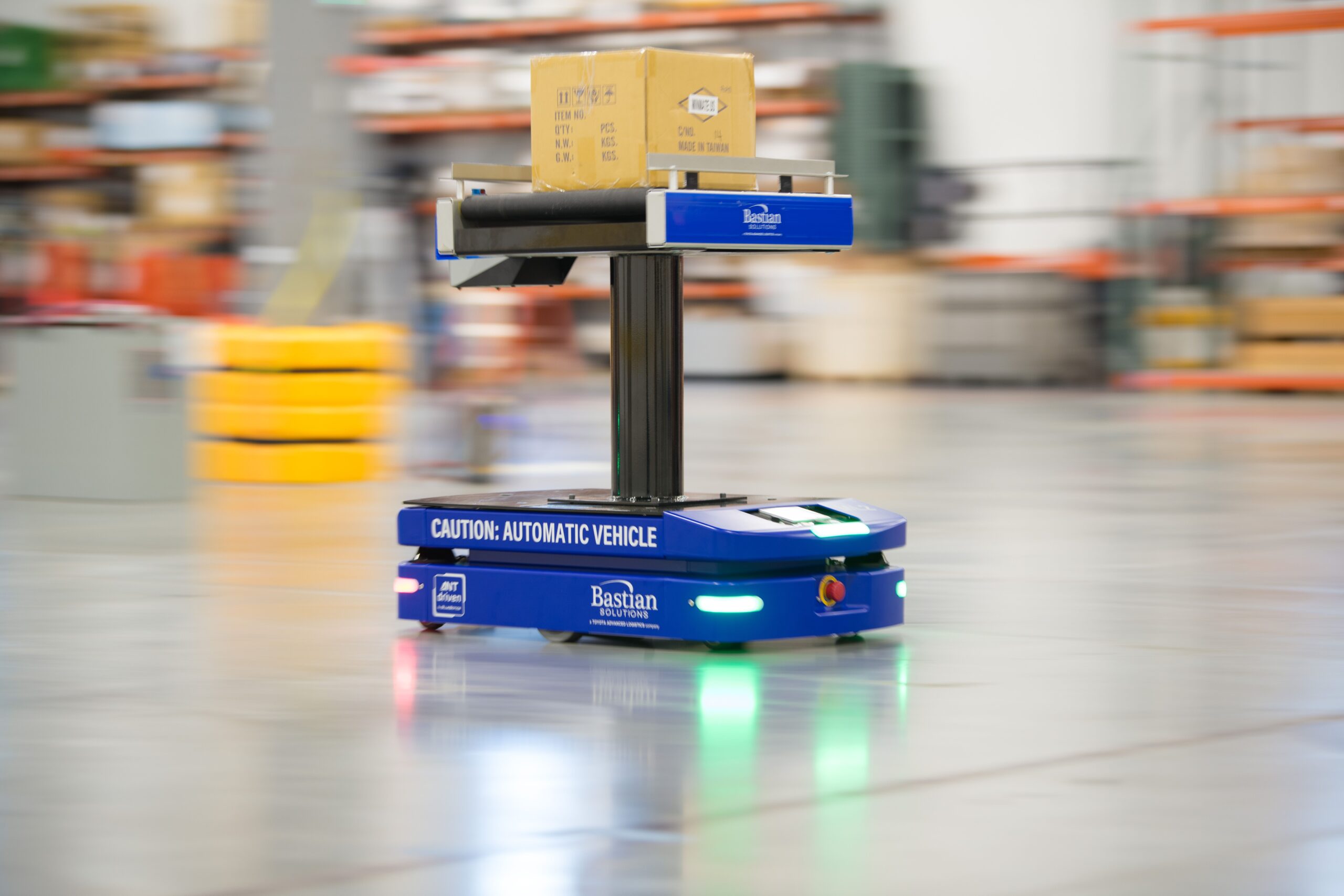
At it’s core, material handling automation means using technology to move, store or manage products and materials with less manual effort. It doesn’t mean removing people from the equation. It means giving your team better tools to work with. Tools that reduce repetitive physical tasks, increase consistency, and free people up to focus on higher-value work.
Think about the difference between a person manually pushing a pallet jack across a 300,000 square foot warehouse 40 times a day versus a guided vehicle doing those repetitive runs automatically while that same person focuses on quality checking or exception handling. That’s automation in action.
What Does Automation Look Like in a Real Warehouse?
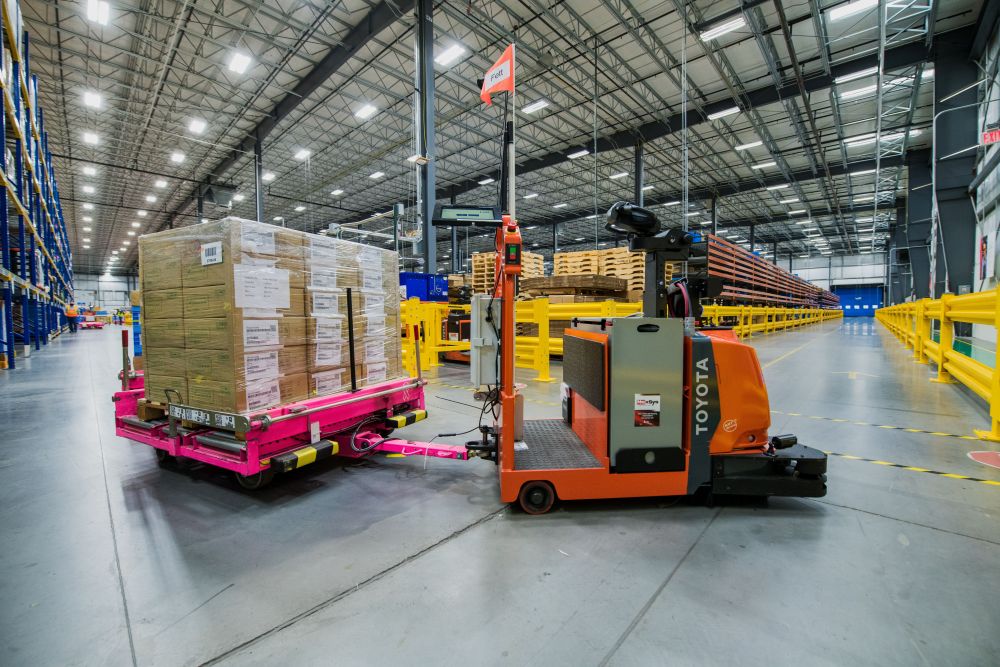
Automation in material handling covers a wide spectrum. It’s not just robots on an assembly line or fully unmanned facilities. It includes:
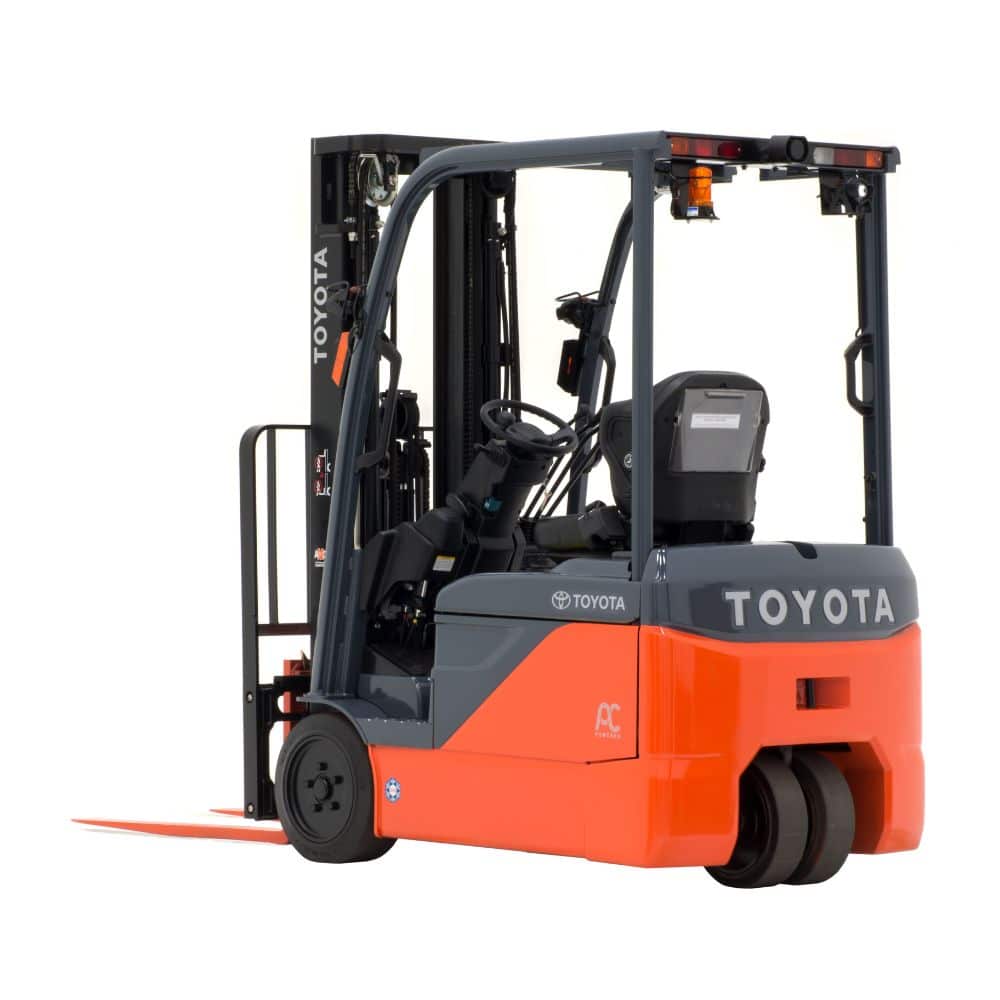
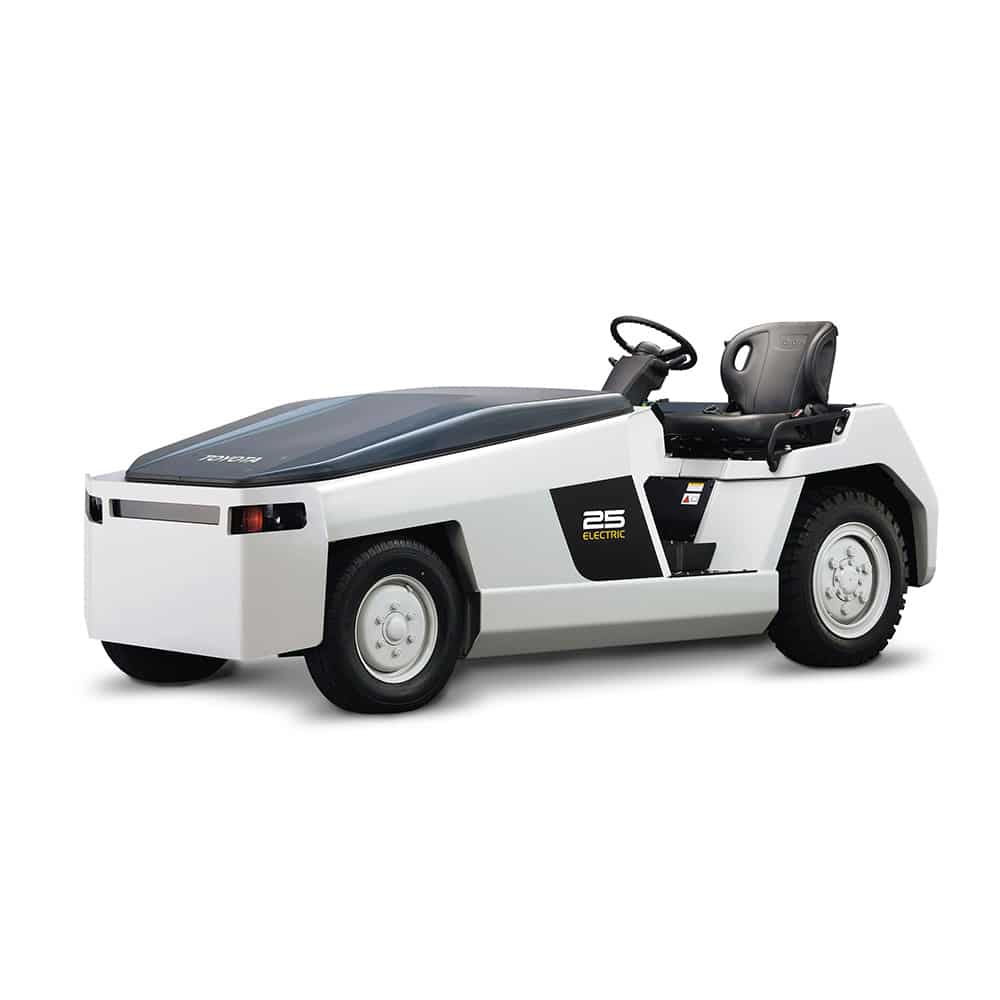
- Autonomous Mobile Robots (AMRs) and Automated Guided Vehicles (AGVs): forklifts, pallet jacks, or tow tractors that navigate your facility on their own, moving loads from point A to point B without a driver.
- Automated Storage and Retrieval Systems (AS/RS): systems that automatically store and retrieve pallets or cases in high-density racking, often dramatically increasing your storage capacity.
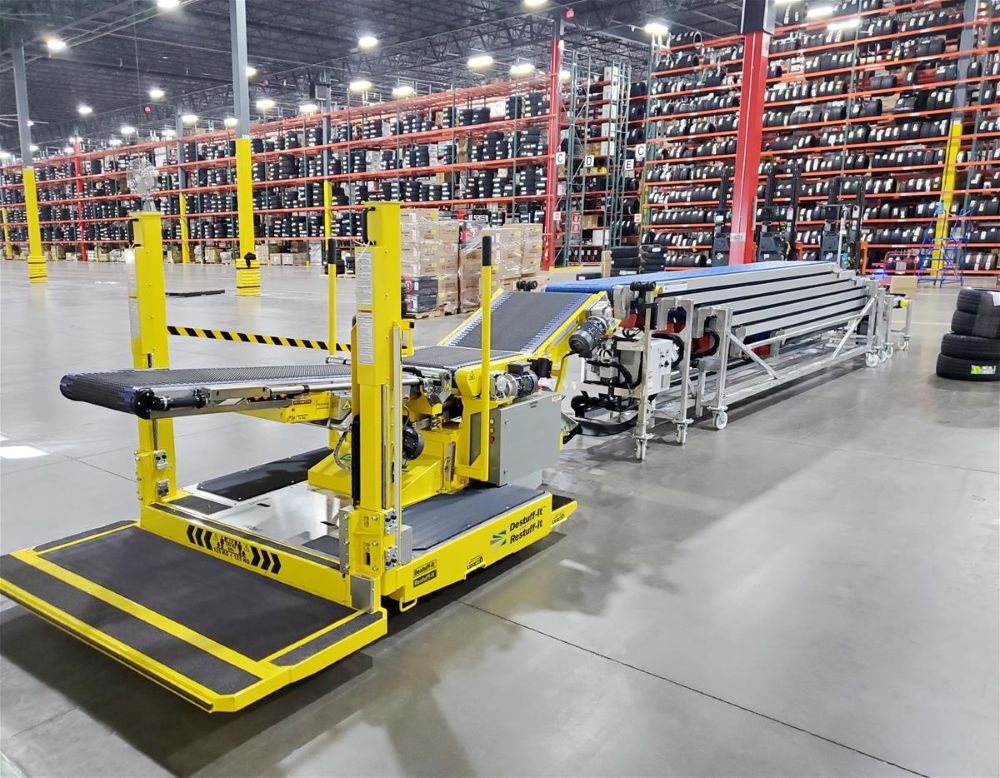
- Conveyor and sortation systems: automated movement of products through a facility, commonly used in distribution and fulfillment.
- Warehouse Execution Systems (WES) and Warehouse Management Systems (WMS): software that coordinates and optimizes tasks across your operation, directing both people and machines.
- Semi-automated equipment: lift trucks with telemetry and advanced operator assist features, like automatic speed reduction in curves or load weight sensing, that make the operator’s job safer and more consistent.
Toyota Material Handling and Toyota Automated Logistics – our manufacturing and automation partner – offer solutions across all of these categories, from simple operator-assist features on their lift trucks to fully integrated AGV systems designed to work alongside your existing team.
Learn more about our automation and facility solutions.
Isn’t This Just for Big Operations?
It used to be. Ten years ago, automation had a very high floor – in terms of cost, complexity, and the level of expertise needed to implement and maintain it. It was largely the territory of large national retailers, automotive manufacturers, and e-commerce giants.
That’s changed significantly. The technology has matured. Costs have come down. And solutions have been designed to be modular and scalable, meaning you can start small, prove out the value, and grow from there.
We work with operations of all sizes across Kansas and Missouri, and we’re seeing companies with 50,000 square feet getting real, measurable results from automation. It’s not about the size of your building. It’s about identifying the right problem to solve.
Why Are So Many Operations Exploring It Now?
A few things have converged to make automation especially relevant right now:
- Labor challenges. Finding, training, and retaining reliable warehouse workers has become genuinely difficult in most markets. Automation doesn’t eliminate the need for people, but it can help you do more with the team you have.
- Increased throughput demands. Customer expectations around speed and accuracy have risen sharply. Automation can help operations keep pace without simply adding headcount.
- Safety concerns. Repetitive tasks and human-machine interactions are among the leading sources of warehouse injuries. Automated equipment is predictable, consistent, and doesn’t get tired.
- Cost pressures. Labor is typically the largest variable cost in a warehouse operation. Improving efficiency and reducing errors has real financial impact.
None of these are new problems, but the tools available to address them have gotten a lot better.
Where Does Lift Truck Center Fit In?
As an authorized Toyota Material Handling dealer serving Kansas and Missouri, we’ve been helping operations find the right equipment for over 40 years. Automation is a natural extension of that work.
We’re not here to sell you a system you don’t need. We’re here to help you understand what’s possible, what makes sense for your specific operation, and what a realistic path to automation might look like – whether that’s one semi-automated vehicle today or a phased integration plan over the next three years.
In the posts that follow in this series, we’ll dig into whether automation might be right for your operation, how to think about the people side of the equation, and what simple first steps can look like. We hope it’s useful, wherever you are in the process.
Curious about what automation could look like at your facility?
We’re happy to have a straightforward conversation. Reach out to our Systems and Design Specialist and let’s talk through what you’re working with.
Next in the series: Is Automation Right for My Operation? 5 Signs It Might Be Time.
Categories