Call Us:
(800) 362-3097
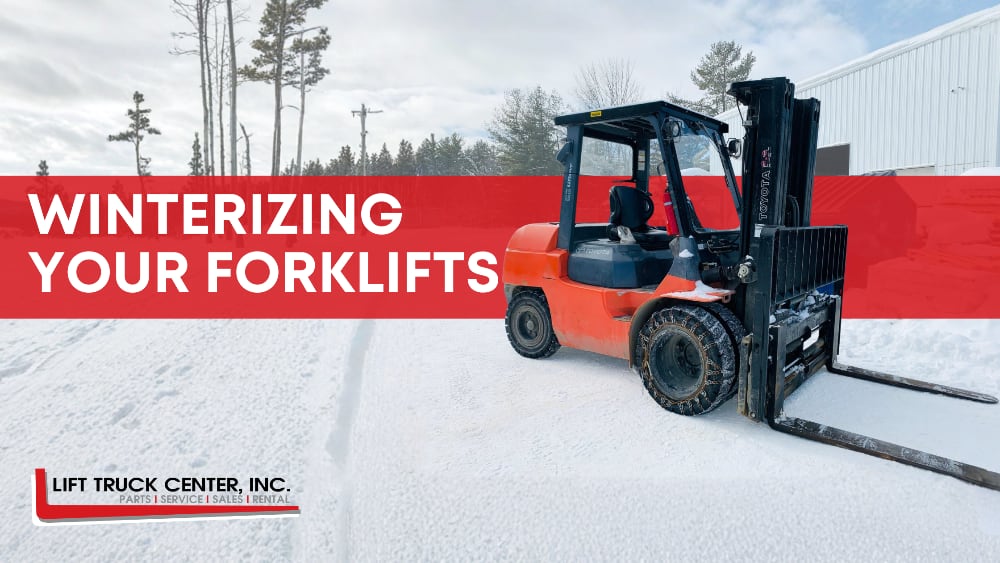
Winterizing Your Forklift: Guide for Cold-Weather Preparedness
January 19, 2026
Winter brings a unique set of challenges for material handling equipment. Freezing temperatures, snow, and ice can increase wear on your forklifts and create unsafe working conditions if your fleet isn’t prepared. At Lift Truck Center, we want you to keep your trucks running safely and efficiently all season long — so here’s a comprehensive guide to winterizing your forklift fleet before the cold hits.
Prepare Your Battery and Charging System
Cold weather significantly reduces battery performance on engine powered forklifts. Before winter:
- Clean and secure battery terminals to improve electrical connections.
- Consider the use of engine block heaters.
Check and Replace Fluids
Cold conditions can thicken engine oil, hydraulic fluid, and other lubricants – making systems work harder and wear faster.
- Replace filters and verify fluids are clean going into winter.
- Switch to lower viscosity engine oil and hydraulic fluids designed for cold climates.
- Inspect antifreeze/coolant levels and top off with the appropriate mix to prevent freezing.
Inspect and Prepare Tires
Not all forklift tires are meant to be in winter conditions, so before inspecting your tires, ensure they are appropriate for the environment they are in.
- Check tread depth and structural condition. Adequate traction helps prevent slips and reduces stress on the machine.
- Keep tire pressure at recommended levels as cold air can cause pressure to drop if pneumatic.
- If your operation deals with ice or heavy snow, consider using tire chains.
Protect Critical Components
- Apply winter-rated lubricants to moving parts like mast chains and pivot points.
- Inspect hoses and seals for cracks that could worsen in cold.
- Ensure all lights are working properly.
- Operator comfort affects productivity and safety. Consider using cab enclosures or covers if you are going to put something temporarily to keep seat dry make sure it is removed before using the truck to not impede vision
Train Operators for Winter Conditions
Even the best-maintained forklifts can be mishandled if operators aren’t ready for winter conditions.
- Ensure operators are trained to access conditions to determine whether it is safe to operate a forklift given the winter conditions.
- Train operators on allowing a few minutes of warm-up time before heavy lifting to protect hydraulics and internal components.
- Train on reduced speeds in ice or snow.
- Instruct on clear procedures for pre-shift inspections focused on winter concerns (tires, lights, fluids, battery).
Keep Equipment Clean and Clear
Salt, snow, and ice buildup can cause corrosion and mechanical issues.
- Clear snow and ice from work areas, docks, and storage lots.
- Park unused forklifts indoors or under covering when possible to minimize exposure. If you are unable to have covering and decide to put something up temporarily to keep seat dry make sure it is removed before using the truck to not impede vision.
Final Thoughts
Winter weather doesn’t have to mean downtime and unexpected repairs. By taking proactive steps now, from battery care and fluid changes to operator training and tire prep, you’ll safeguard your fleet’s performance and protect your investment throughout colder months. At Lift Truck Center, we’re here to help you winterize your forklifts the smart way. Contact us if you need parts, service, or expert advice!
Categories